
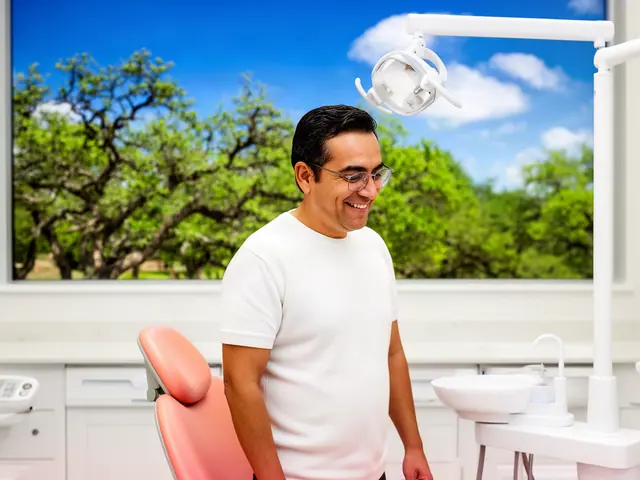
Dental office requests from Cleburne, Texas practices are passed by Orchardshore Advances to funding partners. This page covers adding operatories, dental equipment, practice buyouts and associate-to-owner transitions, working capital between insurance payments, and the advisers around an acquisition.
At a glance
- Offices of dentists, Johnson County, TX
53 employer establishments (CBP 2023)
- Dental office employees and payroll
448 employees, $32.7 million (CBP 2023)
- Dental offices with fewer than five employees
11, or 20.8% (CBP 2023)
Dental Practice Loans for a Johnson County, TX Office Adding Operatories
Adding an operatory means plumbing and electrical work, cabinetry, a chair and delivery unit, a light, a sensor or imaging station, and a monitor and computer. Part of it is equipment that can secure its own financing; part is build-out that rests on the practice's records. Partners look at whether the schedule has room for the new chair: hygiene backlog, new patient flow and the hours the practice is open.
Johnson County, TX dental offices are larger than the county's typical small employer: only 11 of the 53 with paid employees, 20.8%, had fewer than five employees in 2023, compared with 53.3% of all county employers (County Business Patterns). A separate count, Nonemployer Statistics, found 38 dental offices with no paid staff in 2024.
Dental Equipment Loans: Chairs, Sensors and Cone-Beam Units
Chairs, delivery units, sterilization equipment, digital sensors, panoramic and cone-beam imaging, intraoral scanners and milling units are long-lived and valuable, which makes them good collateral. Manufacturer and supply-house programs compete with outside equipment loans; compare the total cost, the warranty and service terms, and whether software subscriptions are included. The CBCT and milling article works through a larger technology purchase.
Dental Practice Buyouts and Associate-to-Owner Transitions
An associate buying into or buying out the practice where they work is one path to ownership. The partner reviews the practice's collections and production, the hygiene program, the patient count, the payer mix, and the associate's own production history in that office. A phased buy-in, where the associate buys a share now and the rest later, can be financed in stages.
- Three years of practice tax returns and production and collection reports.
- How many active patients the office sees, and how many new ones arrive each month.
- Fee-for-service versus insurance mix.
- The draft purchase agreement and any non-compete or transition terms.
Dental Business Loans for Working Capital Between Insurance Payments
Insurance claims take time to pay, and a practice that adds a hygienist or an associate pays them before the new production is collected. A line of credit for payroll during that ramp-up, paid down as collections catch up, fits that pattern. Partners look at the claims aging and the practice's collection rate.
The Attorney, Consultant and Accountant Around a Dental Practice Acquisition
A dental acquisition can involve a practice consultant who values the practice, an attorney who drafts the purchase agreement and reviews the lease and employment terms, and an accountant who reviews the books and structures the purchase for tax purposes. Orchardshore is none of these; it handles the funding request. A partner will want to see the valuation and the agreement those advisers produce.
Two New Operatories Financed Over Seven Years, With Invented Figures
Illustration only, invented figures: a Cleburne practice prices two operatories at $72,000 each, $144,000 in all. Spread over 84 months at an annual rate of 8.5%, the payment is about $2,280 a month (our arithmetic, fees excluded). The practice compares that with the hygiene production two extra chairs could add.
Buying Into a Practice With an Existing Equipment Lease
An acquired practice may come with equipment leases still running. The buyer has to decide whether to assume them, pay them off at closing or replace the equipment. Each choice changes the amount financed. Ask the seller for every lease, its remaining payments and its end-of-term option, and give that list to the partner with the purchase agreement.
Older imaging or chairs near the end of their service life can cost more to keep than to replace, or less; a written equipment assessment from a supplier helps the buyer and the partner see the same picture. Put the replacement plan and its cost in the request, so the partner sizes the purchase and the first year's equipment spending together rather than meeting a second request a few months later.
Dental Practice Loans and the Rest of the Practice's Debt
Partners add up every obligation: equipment leases, the build-out loan, any practice purchase note and credit lines. A practice that has refinanced or paid down older equipment debt before adding new chairs gives a partner more room to say yes. List every payment on the request, including leases that may not appear on a credit report.
By Orchardshore Advances · Updated